
Physio PS Launches New Enhanced Remote Diagnostic Service for Autonomic Nervous System Disorders
Remote Autonomic Diagnostics -as-a- Service Program $500 Off!
Clinician-Guided
At-Home Testing
Comprehensive Autonomic Assessments
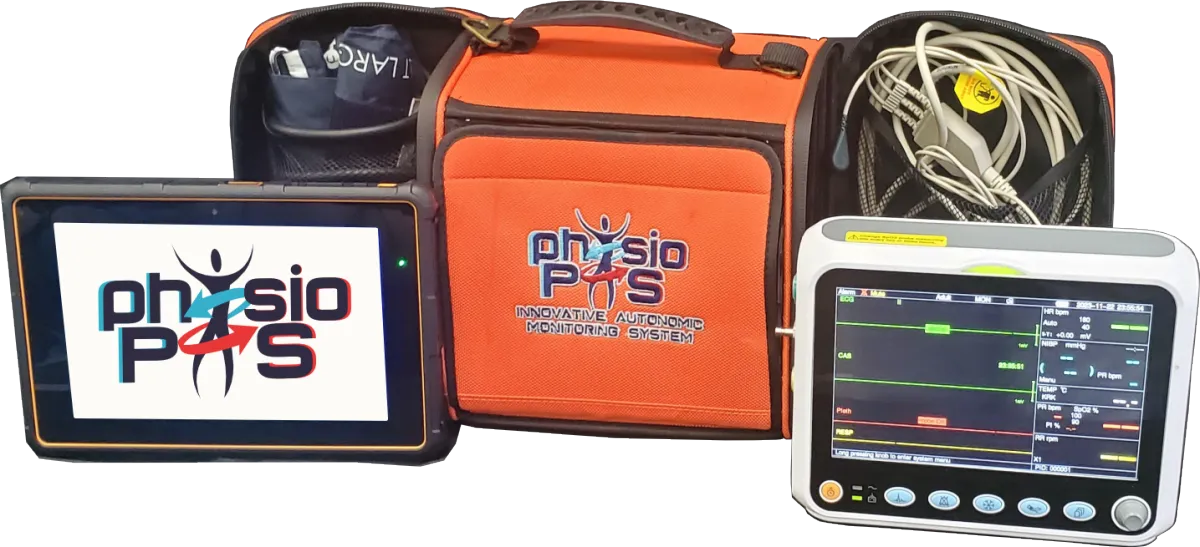
Autonomic Testing, Now Within Reach of More Patients
Physio PS Launches Enhanced Remote Autonomic Diagnostics-as-a-Service
Clinician-guided, at-home autonomic nervous system testing designed to help healthcare providers evaluate complex patients—without requiring every patient to travel to a specialty testing center.
Remote Testing Option
What If the Testing Could Come to the Patient?
For many patients with complex or unexplained symptoms, getting an autonomic nervous system assessment can mean traveling long distances, waiting months for a specialty appointment, or navigating the physical and emotional burden of visiting a testing facility.
Physio PS is changing that model.
The enhanced Remote Autonomic Diagnostics-as-a-Service program brings clinician-guided autonomic testing directly to the patient's home.
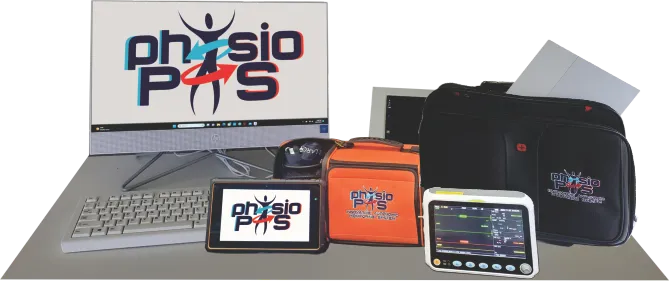
A portable Physio PS diagnostic kit is shipped to the patient. A trained clinician guides the patient through the testing remotely. The equipment is returned using a prepaid shipping label, and the treating physician receives the resulting test report to support clinical evaluation and care planning.
Specialized testing doesn't always have to require a specialty clinic.
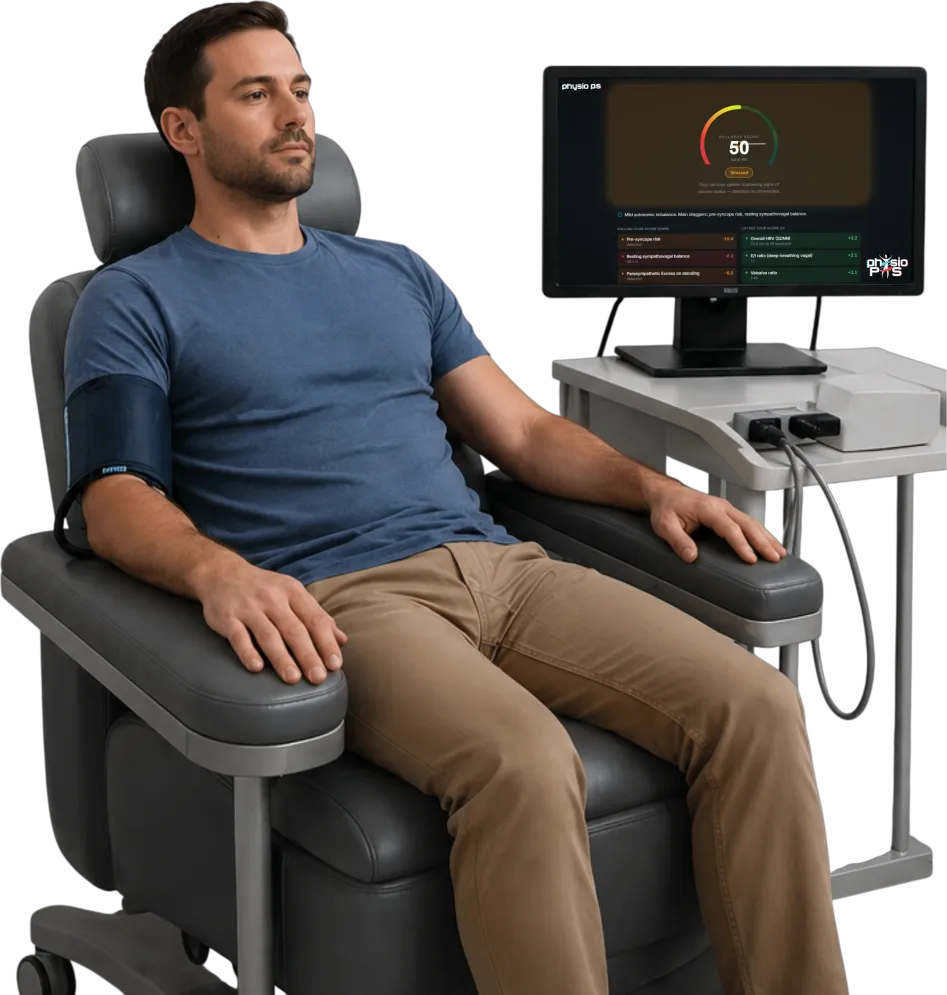
Portable equipment. Live clinical guidance. Physician-directed care.
A New Model for Autonomic Testing
The Remote Autonomic Diagnostics-as-a-Service model combines the technology of the FDA-cleared Physio PS 4.0 SaMD with remote clinical administration and reporting.
The result is a testing model designed to extend access to autonomic assessment while maintaining clinician involvement throughout the testing process.
The program includes:
Portable diagnostic equipment shipped directly to the patient
Three-lead ECG for cardiac monitoring
Blood-pressure cuff for blood-pressure assessment
Remote clinician guidance throughout the testing process
Guided autonomic testing protocols, including breathing and standing components when appropriate
Prepaid return shipping
Formal test results provided to the treating physician
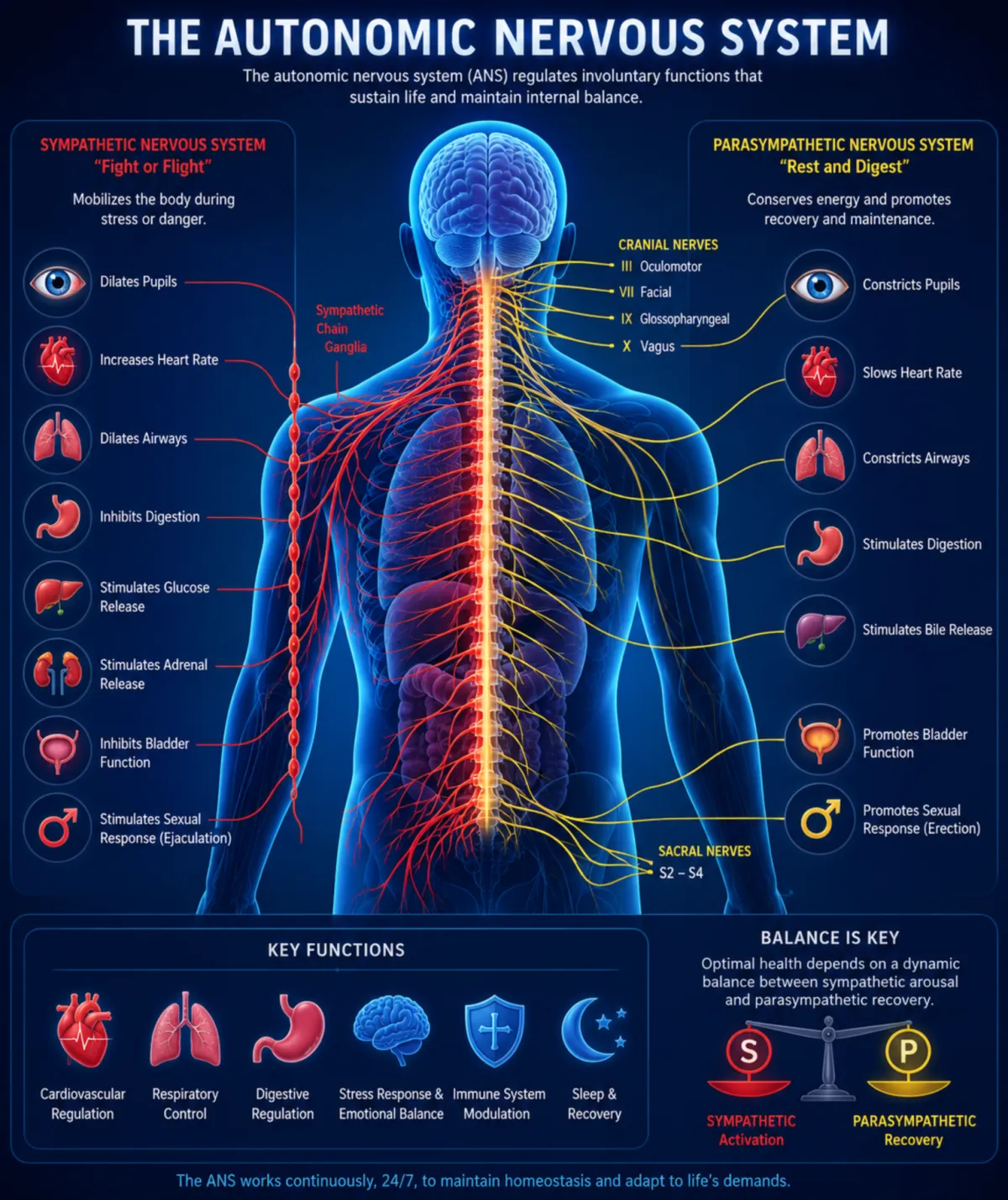
Physio PS technology is designed to quantitatively assess parasympathetic and sympathetic activity independently and simultaneously.
The Future of Autonomic Testing Is More Accessible
For decades, access to specialized autonomic testing has often depended on where a patient lives and whether a specialty center is available nearby.
Physio PS is working to change that.
Specialized testing.
Clinician guidance.
Remote access.
Physician-directed care.
Better connected data.
The diagnostic capability can come to the patient—not the other way around.
More Knowledge. Better Care.
Who Can This Help?
Remote autonomic testing may be particularly valuable when patients have persistent or unexplained symptoms and access to specialty autonomic testing is limited.
Patients Experiencing Dizziness & Fainting
Dizziness when standing
Syncope
Orthostatic intolerance
Lightheadedness
Patients Experiencing Heart Rate & Cardiovascular Symptoms
Rapid heartbeat
Exercise intolerance
Abnormal heart-rate responses
Blood-pressure regulation concerns
Patients Experiencing Persistent & Post-Viral Symptoms
Post-COVID symptoms
Long COVID
Persistent fatigue
Brain fog
Delayed recovery
Patients Experiencing Complex & Multisystem Conditions
Suspected POTS
Dysautonomia
Hypermobility / EDS
Mast-cell-related symptoms
Chronic fatigue
Complex chronic pain
Physio PS's clinical resources identify orthostatic intolerance, syncope, POTS, EDS, post-COVID/Long COVID, exercise intolerance, and nervous-system disorders among areas where autonomic assessment may provide additional information for clinicians.
Easy-To-Use.
How Remote Testing Works
01 — The Kit Ships to the Patient
A self-contained Physio PS diagnostic kit is shipped directly to the patient's home.
The kit includes the equipment required for the remote assessment.
02 — The Patient Connects With a Clinician
The patient receives remote guidance from a trained clinician who helps with equipment setup and prepares the patient for testing.
03 — Testing Is Administered Remotely
The clinician administers the appropriate Physio PS testing protocol remotely.
04 — The Equipment Is Returned
After testing, the patient repacks the equipment and returns the kit using the included prepaid shipping label.
05 — The Physician Receives the Results
The treating physician receives the formal test results to support clinical assessment, diagnostic decision-making, and individualized care planning.
Depending on the protocol and clinical circumstances, testing may include:
Rest → Guided Breathing → Standing / Orthostatic Challenge → Recovery
The testing is designed to capture physiological responses rather than relying solely on symptoms reported by the patient.
It's a Different Way to Deliver Autonomic Testing.
More Than a Portable Device
The value of the program isn't simply moving equipment from a clinic to a patient's home.
It's changing the delivery model.
Traditional specialty testing can require:
Patient → Travel → Specialty Center → Testing → Return Home
The Remote Autonomic Diagnostics-as-a-Service model creates another pathway:
Patient → Home Kit → Remote Clinician → Testing → Physician Results
That can help extend specialized testing to patients who live far from specialty centers or face barriers to traditional testing.
Why Autonomic Function Matters
The autonomic nervous system helps regulate many functions that occur automatically—including heart rate, blood pressure, breathing, digestion, temperature regulation, and the body's response to stress.
When autonomic regulation becomes impaired, patients may experience symptoms affecting multiple systems.
The challenge is that these symptoms can be intermittent, nonspecific, and difficult to connect to a single underlying mechanism.
Physio PS is designed to provide clinicians with quantitative information about autonomic function by assessing the parasympathetic and sympathetic branches independently and simultaneously.
Instead of asking only:
"What symptoms is the patient experiencing?"
Clinicians can also ask:
"What is the patient's autonomic system doing?"
It's the Complete Testing Model.
The Difference Is More Than the Technology
Traditional Model
Patient
Travel
Specialty Center
Testing
Return Home
Physio PS Remote Model
Patient
Home Kit
Remote Clinician
Testing
Physician Results
The Result?
More access. Less travel. Clinician oversight. Objective data. Connected care.
Remote autonomic assessment can provide another layer of physiological information for the treating clinician.
Built for Complex Patients
Some patients don't fit neatly into a single diagnostic category.
They may see multiple specialists.
They may have normal results on conventional testing.
They may be treated for individual symptoms without a clear picture of the underlying physiology.
And they may continue to struggle.
Remote autonomic assessment can provide another layer of physiological information for the treating clinician.
Potentially relevant patient populations include:
POTS and suspected POTS
Syncope and orthostatic intolerance
Post-COVID and Long COVID
Chronic fatigue
Exercise intolerance
Hypermobility and EDS
Complex chronic pain
Neurological disorders
Cardiovascular conditions
Patients with persistent unexplained symptoms
Physio PS currently positions its technology for use across multiple specialties and clinical conditions, including cardiology, neurology, physical therapy, orthostatic intolerance, syncope, POTS, EDS, and post-COVID conditions.
Testimonials
Here’s What Our Customers Think!
We're incredibly proud of the positive impact our products have made. Here’s a look at what people are saying, with five-star reviews from satisfied customers.
Sean O. Flannagan, PT, DPT, Cert. SMT, Cert. DN, MAACP
"Physio PS has been a gamechanger in uncovering the hidden autonomic dysfunctions that often underlie chronic fatigue, persistent pain, anxiety symptoms, and delayed recovery after whiplash and concussion. It’s given us answers when nothing else could — and a clear path to true healing."

Heather Bloom, MD, FACC, Director of Cardiac Electrophysiology, Atlanta VAMC Associate Professor, Emory University School of Medicine
"As a VA Electrophysiologist, I’ve used ANSAR’s Parasympathetic and Sympathetic Monitoring for years with outstanding results. It delivers diagnostic insights no other tool can provide. One case—a Navy SEAL suffering from severe dizziness and disability—was accurately diagnosed and effectively treated using ANSAR technology, after traditional tests failed. The patient regained his health, quality of life, and independence. This tool is a game-changer for patient care and healthcare efficiency."
Michael Stopyra, Patient
"I cannot say enough good things about Physio PS! This technology has done so much for me. I used to have terrible anxiety storms that would cause me to have high fevers. With this simple test, my doctor was able to find the root cause of my symptoms and prescribe a very low-dose medicine for about nine months to correct the primary problem. I have not had a high fever in four years!"
Advanced Autonomic Testing. Delivered Where Your Patients Need It.
Features & Benefits
The Physio PS Remote Autonomic Diagnostics-as-a-Service program combines FDA-cleared technology, clinician-guided remote testing, and digital reporting to help healthcare providers extend access to autonomic assessment beyond the traditional specialty clinic.
At-Home Diagnostic Kit
FEATURE
A self-contained Physio PS diagnostic kit is shipped directly to the patient, with prepaid return shipping included.
BENEFIT
Patients can complete testing from home without the time, expense, and stress of traveling to a specialty testing center.
Clinician-Guided Remote Testing
FEATURE
A trained clinician remotely guides the patient through equipment setup and administers the appropriate testing protocol.
BENEFIT
Patients aren't left to figure out the testing process on their own, while providers maintain clinical oversight throughout the assessment.
Comprehensive Physiological Monitoring
FEATURE
The system uses a three-lead ECG and blood-pressure cuff to capture physiological responses during autonomic testing.
BENEFIT
Clinicians receive objective physiological information that can add another dimension to the evaluation of patients with complex or unexplained symptoms.
Sympathetic & Parasympathetic Assessment
FEATURE
Physio PS is designed to independently and simultaneously assess sympathetic and parasympathetic nervous system activity.
BENEFIT
Provides clinicians with a more complete view of autonomic function than relying on symptoms or a single physiological measurement alone.
Standardized Testing Protocol
FEATURE
Remote testing can incorporate resting, guided breathing, standing/orthostatic, and recovery components as clinically appropriate.
BENEFIT
Helps capture autonomic responses under different physiological conditions and provides a structured assessment for physician review.
Physician-Ready Reporting
FEATURE
Testing results are processed into a formal report for the patient's treating physician.
BENEFIT
Gives the clinician objective information that can be incorporated into the patient's broader diagnostic evaluation and individualized care plan.
Human OS AI-Enhanced Interpretation & Reporting
FEATURE
The service is enhanced by the Human OS interpretation and reporting application, including AI-enabled capabilities.
BENEFIT
Helps medical professionals review information and respond to patients more efficiently while supporting a more connected approach to clinical data.
Remote Patient Monitoring
FEATURE
The Physio PS ecosystem can incorporate wearable-device data and ongoing monitoring.
BENEFIT
Creates an opportunity to follow patient progress over time rather than relying exclusively on a single point-in-time assessment.
Expanded Geographic Access
FEATURE
Testing can be administered remotely to patients outside the immediate service area of a specialty clinic.
BENEFIT
Helps healthcare organizations extend specialized autonomic assessment to rural, remote, and underserved patient populations.
Reduce Barriers to Specialty Testing
FEATURE
Patients can complete the assessment from home under remote clinical guidance.
BENEFIT
May reduce travel, scheduling, and logistical barriers that can delay access to autonomic testing.
Built for Complex Patients
FEATURE
The program can support evaluation of patients presenting with symptoms associated with autonomic dysfunction, including suspected POTS, syncope, orthostatic intolerance, post-COVID symptoms, fatigue, and exercise intolerance.
BENEFIT
Gives clinicians an additional source of physiological information when patients present with complex, intermittent, or difficult-to-explain symptoms.
Extend Your Clinical Reach Without Building a New Lab
FEATURE
The remote service model combines portable equipment, remote clinical administration, and physician reporting.
BENEFIT
Healthcare organizations can explore expanding access to autonomic testing without requiring every patient to physically visit a dedicated autonomic testing facility.
From Access to Insight
Test
Collect objective physiological information.
Interpret
Use Human OS and clinician review to organize and interpret testing information.
Report
Provide results to the treating physician.
Monitor
Track relevant patient information over time.
Reassess
Give clinicians the opportunity to evaluate changes alongside the patient's clinical picture.
Bring Autonomic Testing Closer to the Patient.
Physio PS Remote Autonomic Diagnostics-as-a-Service
Specialized testing. Remote access. Clinician guidance. Physician-directed care.
Expand Access Without Expanding Your Facility
Bringing the Autonomic Lab to the Patient
Healthcare organizations don't necessarily need to build a dedicated autonomic testing laboratory to extend access to this service.
The Remote Autonomic Diagnostics-as-a-Service model is designed to provide:
Reach
Serve patients outside your immediate geographic area.
Convenience
Reduce the need for patients to travel to specialty centers.
Clinical Oversight
Keep a trained clinician involved in the testing process.
Objective Data
Provide quantitative physiological information for physician review.
Scalability
Create a model that can extend autonomic testing across geographically dispersed patient populations.
Physio PS offers in-office, portable, and deployable autonomic testing options designed for clinicians and healthcare organizations.
Built Around the Needs of Both Providers and Patients
Extend Your Autonomic Testing Capabilities
For Physicians & Healthcare Organizations
The Remote Autonomic Diagnostics-as-a-Service program may be particularly valuable for:
Autonomic specialists
Cardiologists
Neurologists
Primary care physicians
Functional medicine practices
Rehabilitation providers
Post-COVID clinics
POTS programs
Complex-care practices
Specialty healthcare organizations
Rural and geographically distributed healthcare networks
Give your patients access to specialized autonomic assessment—without making every patient travel to a specialty center.
Meeting your needs with:
Extend testing capabilities
Reach patients beyond your geographic area
Receive structured test results
Support complex-patient evaluation
Incorporate longitudinal monitoring
Connect testing with digital reporting
Support more efficient patient communication
Your Symptoms Are Real. Getting Answers Shouldn't Depend on Your ZIP Code.
For Patients
If you've been experiencing unexplained dizziness, fainting, rapid heartbeat, fatigue, exercise intolerance, post-COVID symptoms, or other persistent symptoms, ask your healthcare provider whether autonomic nervous system testing may be appropriate for you.
Physio PS testing is ordered and interpreted within a healthcare setting.
Physio PS does not diagnose or treat patients directly.
Give your patients access to specialized autonomic assessment—without making every patient travel to a specialty center.
Assisting patient needs with:
Testing from home
Reduce travel burden
Remote clinician guidance
Convenient equipment delivery
Prepaid equipment return
Testing within a familiar environment
Less dependence on specialty-center access
Frequently Asked Questions
When you have a question, chances are someone else has too. Here are the answers to the most common questions about our product.
What is Physio PS Remote Autonomic Diagnostics-as-a-Service?
Physio PS Remote Autonomic Diagnostics-as-a-Service is a clinician-guided testing program that allows patients to complete autonomic nervous system testing from home. A portable Physio PS diagnostic kit is shipped to the patient, testing is administered remotely by a trained clinician, and the results are provided to the patient's treating physician.
Who is the service designed for?
The program is designed primarily for healthcare professionals and organizations seeking to expand access to autonomic nervous system assessment.
It may be particularly useful for providers evaluating patients with symptoms or conditions such as:
- Suspected POTS
- Dysautonomia
- Syncope or fainting
- Orthostatic intolerance
- Dizziness
- Rapid heartbeat
- Exercise intolerance
- Persistent fatigue
- Post-COVID or Long COVID symptoms
- Complex or unexplained symptoms
Does the patient need to travel to a specialty clinic?
No, not necessarily.
The remote program is designed to bring the testing process to the patient's home, potentially reducing the need for long-distance travel to a specialty testing facility.
How does the remote testing process work?
The process is designed to be simple:
1. A Physio PS diagnostic kit is shipped to the patient.
2. The patient connects with a trained clinician remotely.
3. The clinician guides equipment setup and administers the appropriate testing protocol.
4. The patient completes the testing session.
5. The equipment is returned using the included prepaid shipping label.
6. The treating physician receives the test results.
What equipment is included?
The remote testing kit includes the equipment required for the applicable assessment, including:
- Three-lead ECG
- Blood-pressure cuff
- Physiological monitoring equipment
- Associated accessories and instructions
Equipment provided may vary according to the applicable testing protocol.
Is the patient left alone to perform the test?
No.
The program includes remote guidance from a trained clinician who assists with setup and administers the appropriate testing protocol.
What does the Physio PS system measure?
Physio PS is designed to provide quantitative information about autonomic nervous system function, including assessment of sympathetic and parasympathetic activity independently and simultaneously.
Testing may also capture physiological responses associated with breathing, standing, blood pressure, heart rate, and recovery, depending on the protocol.
What is the benefit of measuring sympathetic and parasympathetic activity separately?
The autonomic nervous system has two primary regulatory branches: the sympathetic and parasympathetic systems.
Assessing their activity independently can provide clinicians with additional information about autonomic regulation that may not be apparent from symptoms or conventional measurements alone.
What types of testing may be performed?
Depending on the patient's clinical circumstances and applicable protocol, testing may include:
Rest → Guided Breathing → Standing/Orthostatic Challenge → Recovery
The testing protocol is determined and administered by the appropriate healthcare professional.
Who receives the results?
The patient's treating physician or authorized healthcare provider receives the formal test results.
Physio PS does not replace the treating clinician's role in diagnosis, interpretation, or treatment planning.
Can the results diagnose POTS or dysautonomia?
Physio PS provides physiological information that may assist a qualified healthcare professional in evaluating autonomic function.
The treating healthcare professional is responsible for interpreting the results and determining whether a patient meets diagnostic criteria for POTS, dysautonomia, or another condition.
Physio PS does not independently diagnose or treat patients.
Can this help patients with Long COVID?
Autonomic dysfunction may be present in some patients experiencing persistent post-COVID symptoms. Remote autonomic testing may provide clinicians with additional physiological information when evaluating patients with post-COVID or Long COVID symptoms.
What happens after the test?
Once testing is completed, the patient returns the equipment using the prepaid shipping label. The resulting information is processed into a formal report for the treating physician.
The physician can then incorporate the results into the patient's broader clinical evaluation and care plan.
Can patients be monitored after the initial test?
The Physio PS ecosystem can support ongoing monitoring through wearable devices and digital tools, where applicable.
This creates an opportunity for clinicians to evaluate changes in patient information over time rather than relying exclusively on a single assessment.
What is Human OS?
Human OS is an interpretation and reporting application that enhances the Physio PS remote diagnostic service with AI-enabled capabilities.
It is designed to help medical professionals organize and review information more efficiently and support more responsive patient communication.
Is Physio PS a medical provider?
No.
Physio PS develops medical technology and related services. It does not provide medical diagnosis or treatment directly to patients.
Testing results must be reviewed and interpreted by an appropriately qualified healthcare professional.
Who can order or administer Physio PS testing?
Physio PS technology is intended for use by qualified healthcare professionals and authorized healthcare organizations in accordance with applicable product labeling, instructions for use, and applicable laws and regulations.
Is the Physio PS technology FDA cleared?
The Physio PS 4.0 SaMD is described by Physio PS as an FDA-cleared medical device/software medical device.
The applicable FDA clearance, labeling, indications for use, and intended use should always be reviewed before clinical implementation.
Is patient information protected?
Physio PS takes privacy and security seriously. Patient information is handled according to applicable privacy and security requirements.
Healthcare organizations and providers remain responsible for appropriate patient authorization, privacy, security, and medical-record practices. Where applicable, Physio PS may enter into a Business Associate Agreement (BAA) with a covered healthcare organization.
See the Physio PS Privacy Policy for additional information.
How can a healthcare organization learn more?
Healthcare professionals and organizations interested in expanding access to autonomic testing can contact Physio PS to discuss the Remote Autonomic Diagnostics-as-a-Service program.
Our Trusted Research Partners











Physio PS, Inc. develops technology and services designed to support assessment of autonomic nervous system function.
About Physio PS, Inc.
The company's Physio PS technology is used by physicians, medical providers, and researchers to non-invasively monitor parasympathetic and sympathetic nervous system activity. The system is designed to provide quantitative information about autonomic function to support clinical assessment and individualized care planning.
© Copyright 2026 Physio PS, Inc.-All rights reserved.
Physio PS technology is intended for use by qualified healthcare professionals in accordance with applicable product labeling, instructions for use, and applicable laws and regulations. Information presented here is educational and does not constitute medical advice or a guarantee of clinical outcomes.